What Happens During a Comprehensive Eye Exam?
A step-by-step look at what happens during a comprehensive eye exam in Ottawa — from vision testing to retinal imaging — and how to prepare.
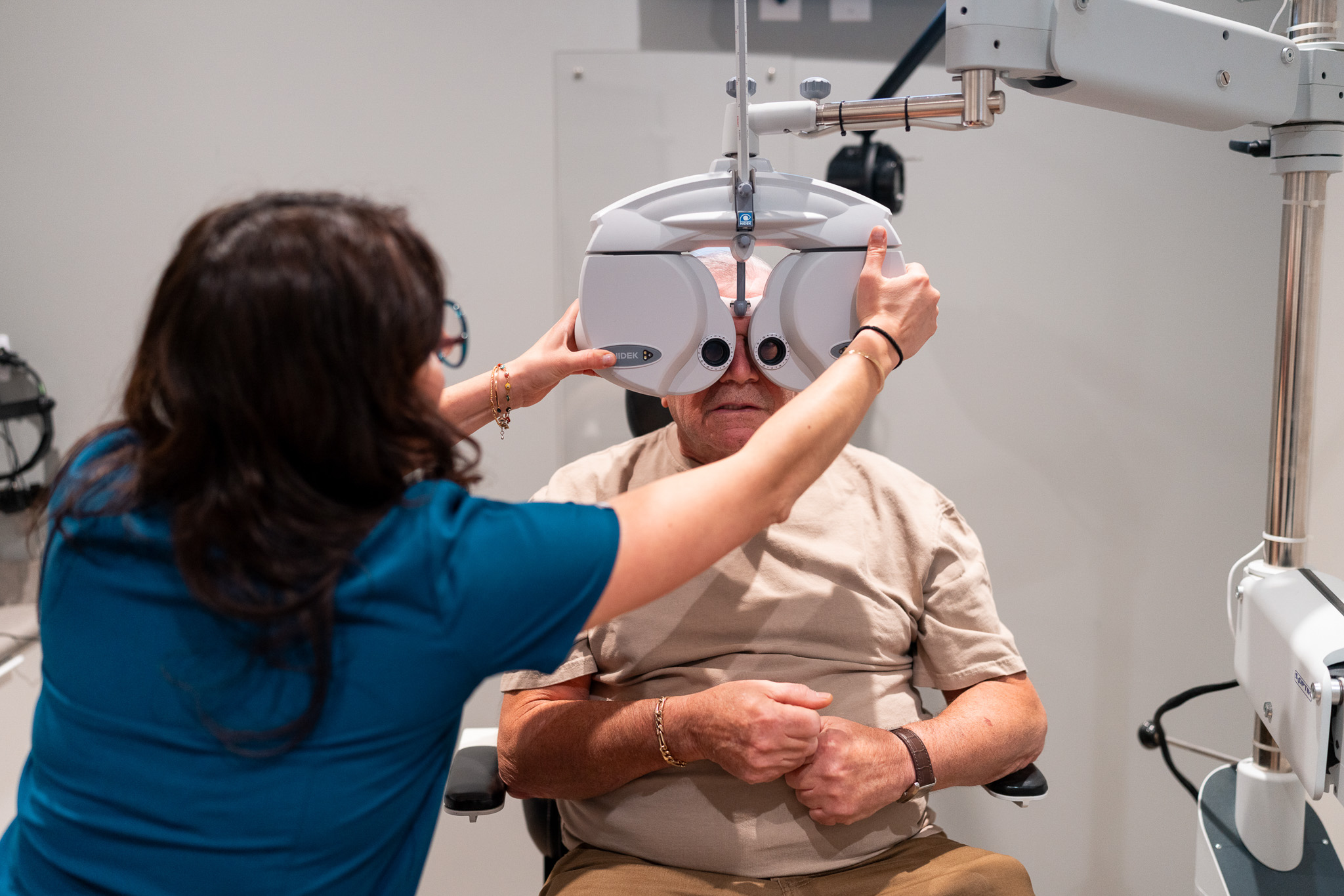
Table of Contents
Short answer: A comprehensive eye exam is a full health check for your eyes. In about 30–45 minutes, your optometrist reviews your history, measures how well you see, checks how your eyes work together, and examines the health of the front, middle and back of each eye —we use advanced imaging like Optomap and OCT — to catch problems early.
Step 1: Your history and concerns
Your exam starts with a conversation about your vision concerns, medical and family eye history, medications, screen habits, office set up, activities and whether you wear glasses or contacts. We analyze what you currently have to compare to your latest measurements and to make sure you have everything you need for work, home and play. This context shapes the rest of the exam.
Step 2: Vision and prescription testing
You'll read a letter chart to measure your visual acuity, and the optometrist will fine-tune your prescription (the "which is clearer, 1 or 2?" part). We also check how your eyes focus and coordinate at different distances.
Step 3: Eye health and function checks
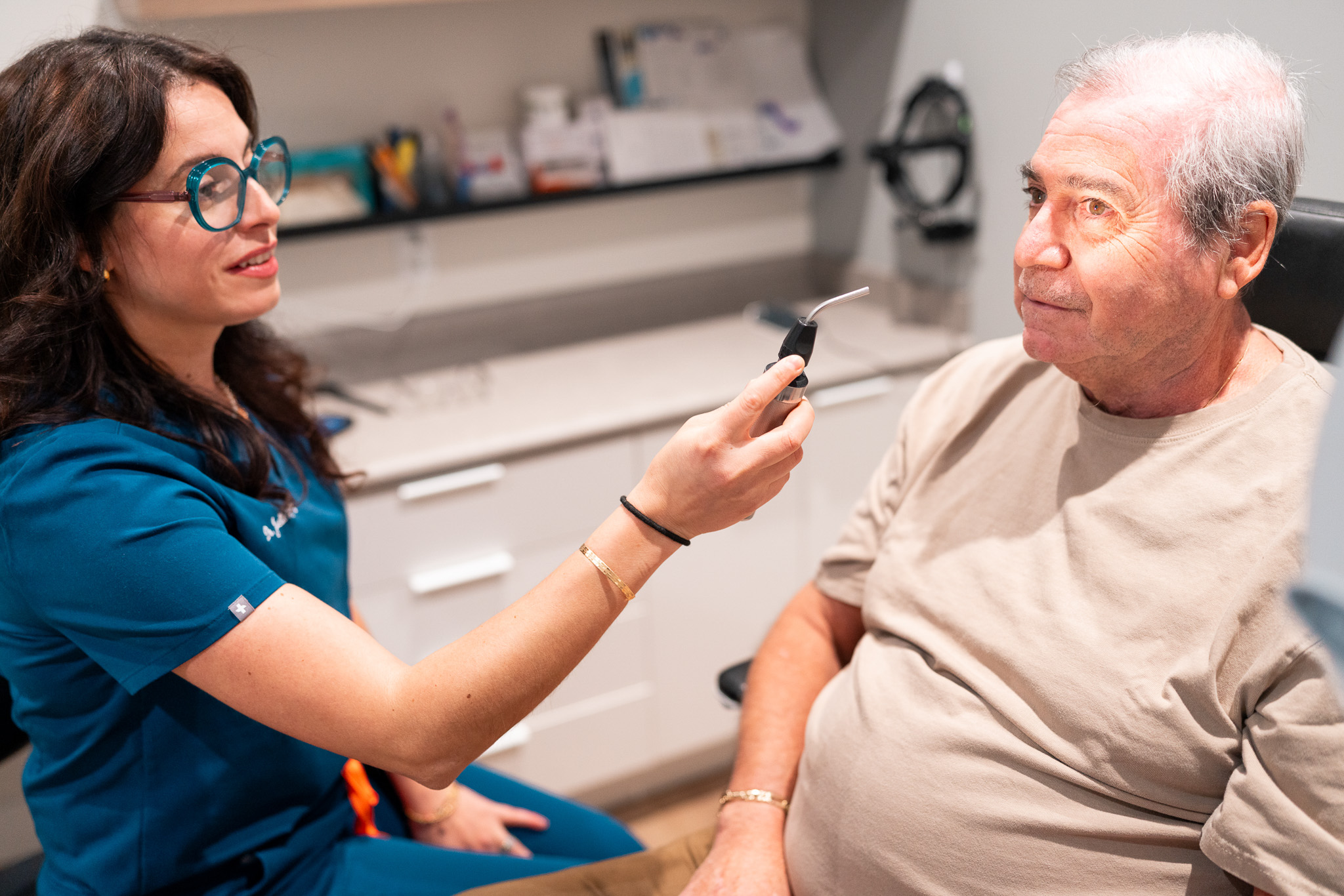
- Eye pressure — an important glaucoma screen.
- Pupil and eye-movement checks — integrity of brain eye connection and how your eyes work together.
- Peripheral (side) vision — to detect blind spots.
Step 4: A detailed look inside your eyes
Using a microscope and often advanced imaging, we examine the cornea, lens (where cataracts happen) the retina, optic nerve, blood vessels and the parts in between:
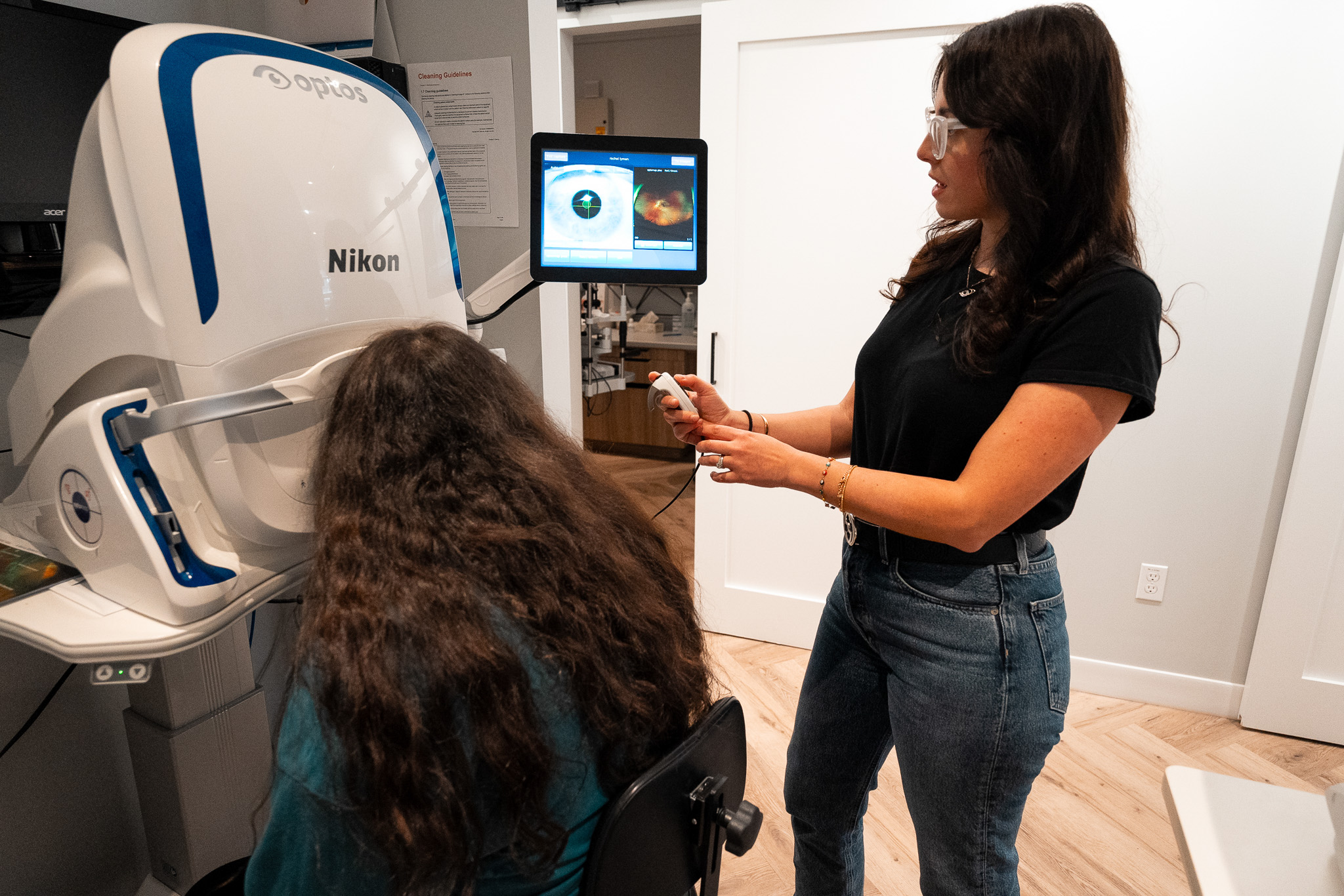
- Optomap — an ultra-wide digital image of the retina, often without dilation.
- OCT (Optical Coherence Tomography) — a cross-sectional scan that reveals changes beneath the surface, years before they'd be visible otherwise.
This is where a comprehensive exam earns its name: it can reveal signs of diabetes, high blood pressure, glaucoma, and macular degeneration and other retinal anomalies. Not just whether you need new lenses.
Step 5: Your results and plan
Your optometrist explains what they found, updates your prescription if needed, and recommends next steps. Whether that's new eyewear, a follow-up, specialist referral or simply a return visit next year. We take the time to explain things clearly so you leave knowing exactly where your eye health stands.
How to prepare
- Bring your current glasses and/or contacts and your prescription if you have it.
- Bring your health card and any insurance details for direct billing.
- Note any symptoms, and bring sunglasses in case your eyes are dilated.
Frequently asked questions
How long does a comprehensive eye exam take?
Usually 30–45 minutes, depending on the testing involved. Always allow an hour.
Will my eyes be dilated?
Sometimes. Advanced imaging like Optomap can reduce the need, but dilation is still used when a closer look is warranted.
How often should I have one?
Most adults benefit from an exam every 1–2 years; children and seniors are typically annual. See our guide on how often to get an eye exam.
Ready to book your comprehensive exam? Merivale · Wellington · Woodward.
Medical Disclaimer
This article is for educational purposes only and does not replace individualized medical advice. If you have concerns about your vision or eye health, please book an eye exam or consult a qualified optometrist.
Related reading: Comprehensive eye exams in Ottawa • How much does an eye exam cost in Ottawa? • Walk-in & same-day eye exams • How often to get an eye exam
Your next step is clear
Whether you need a routine eye exam or specialized care, our team is here for you.